English
 Polski
 Slovenský
 Čeština
 Deutsch
Description
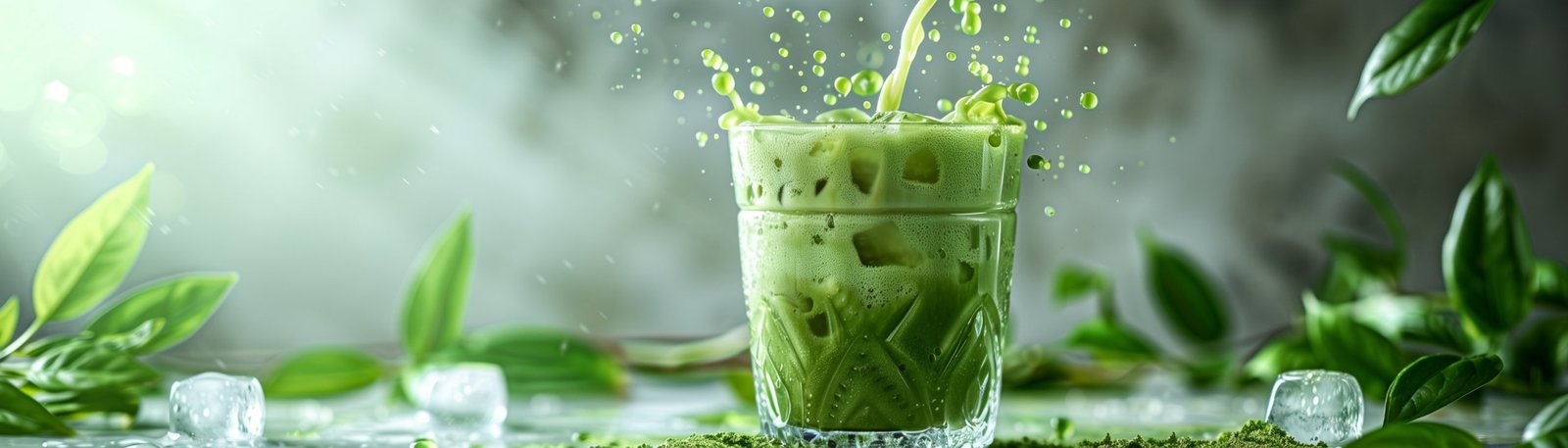
"The whole leaf, ground to a powder and whisked into water."
Matcha | 100% plant-based product | Ground green tea leaves
Matcha: the tea where you drink the whole leaf
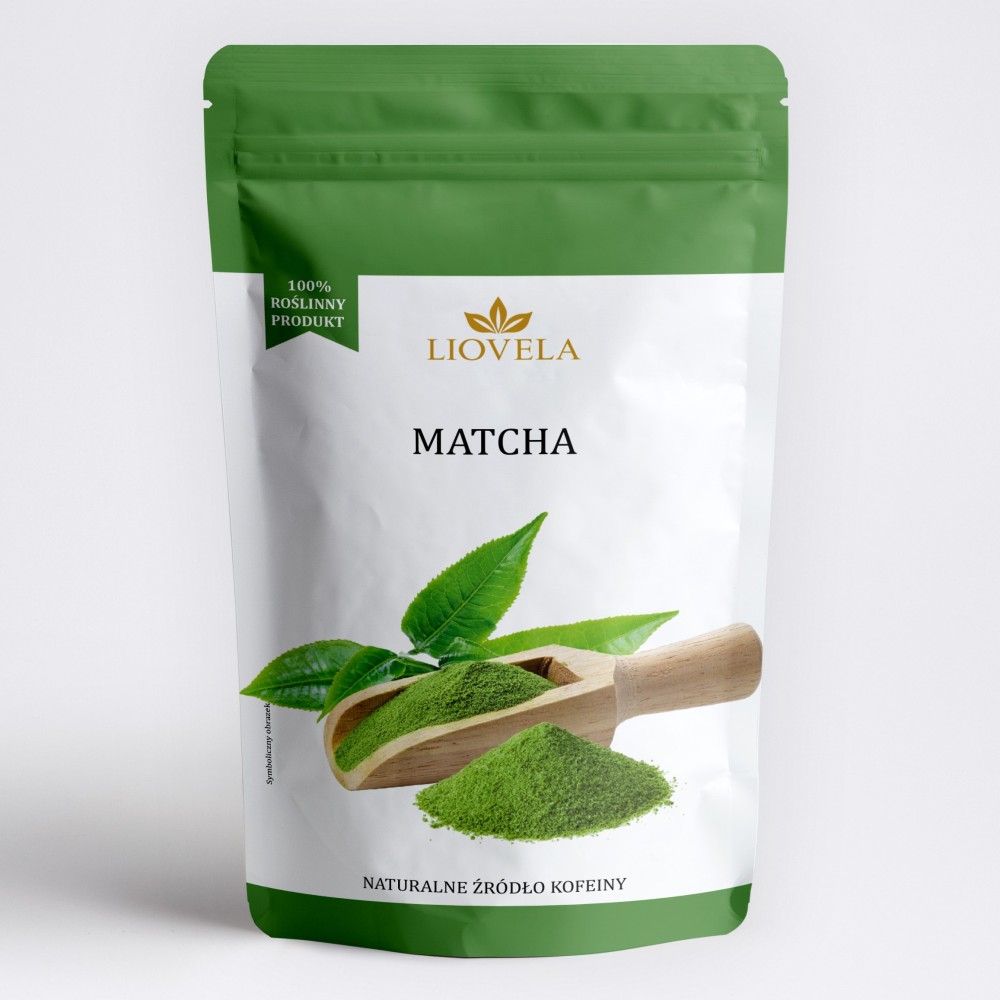
Liovela matcha – finely ground green tea leaves, a 100% plant-based product.
The ingredients list has one line: matcha (ground green tea leaves). Instead of steeping leaves and straining them out, you whisk the fine powder into liquid. It is a traditional Japanese tea that also works in smoothies, shakes, desserts, puddings, ice cream and biscuits, and as an addition to muesli, yoghurt and porridge. It gives intense colour and a bold flavour. Important: high caffeine content, not recommended for children, pregnant or breast-feeding women.
What it's for
Three main uses
Matcha the Japanese way
Whisk the powder into a small amount of warm (not boiling) water with a bamboo whisk or small hand whisk until a light froth forms.
Green drinks
Add to the blender with banana, plant-based drink or fruit. The drink turns an intense green.
Puddings, ice cream, biscuits
Add to biscuits, puddings or homemade ice cream. Matcha brings green colour and a bold flavour.
Good to know
Caffeine and storage
High caffeine content. Not recommended for children, pregnant or breast-feeding women. Start with a small amount, as matcha is used a little at a time.
Keep matcha in a dry, cool place, well closed after opening, as the fine powder easily takes up moisture.
In the kitchen
Matcha: 5 ways to use it
Hot or cold
Whisk half a teaspoon of powder into a little warm water so it does not clump, then combine with frothed plant-based or regular milk. Add ice for a cold version.
In the blender
Blend half a teaspoon of matcha with banana, spinach or mango and plant-based drink. The green colour will be intense.
A bowl topping
Stir a little matcha into yoghurt, or sprinkle into porridge or muesli. Start with a small amount, the flavour is bold.
A dessert idea
Mix 2 tablespoons of chia seeds with 150 ml of plant-based drink and half a teaspoon of matcha. Leave in the fridge for 30 minutes.
Green colour and flavour
Add matcha to biscuit dough or to the mixture for homemade ice cream. Whisk it first into a little liquid so it does not leave lumps.
Add Liovela matcha to your basket and make your first green latte.
Matcha | The numbers
The numbers
36.4 g of fibre and 29.9 g of protein per 100 g.
100 g of matcha is 303 kcal, 36.4 g of fibre and 29.9 g of protein. Under EU rules we can describe it as high in fibre and high in protein (the protein provides about 40% of the energy). Bear in mind that matcha is used in small amounts, so these figures refer to 100 g of product, not to a single serving. Fat is 3.74 g (of which saturates 0.81 g), carbohydrates 19.1 g (of which sugars 1.4 g) and salt less than 0.01 g. The full table is further down the page.
Did you know?
A word that means “powdered tea”
The name matcha comes from Japanese and means roughly “powdered tea”. It differs from ordinary green tea in that you do not strain the leaves out, but drink them with the liquid as a fine powder.
Who Liovela matcha is for
For anyone who likes a bold, green flavour
For those who like green tea in a new form, green froth in lattes and colour in desserts. For fans of smoothies, puddings and home baking. For adults who remember that it is a product with a high caffeine content.
Frequently asked questions
The most important answers (FAQ)
1. What is matcha?
Finely ground green tea leaves. The ingredients list contains only matcha (ground green tea leaves).
2. How is it different from ordinary green tea?
Ordinary tea is steeped and the leaves are strained out. You whisk matcha into liquid and drink it along with the fine powder.
3. How do I prepare matcha?
Whisk the powder into a small amount of warm (not boiling) water until frothy, or add it to a smoothie, shake, yoghurt or porridge.
4. Does matcha contain caffeine?
Yes, the label describes it as a natural source of caffeine and warns of its high caffeine content.
5. Who is matcha not recommended for?
Children, pregnant and breast-feeding women.
6. What can matcha be used for besides tea?
Smoothies, shakes, desserts, puddings, ice cream, biscuits, muesli, yoghurt, porridge, and also sauces and Asian-style dishes.
7. How many calories does matcha have?
100 g of the product has 303 kcal, but it is normally used a little at a time.
8. Is matcha high in fibre and protein?
Yes: 36.4 g of fibre and 29.9 g of protein per 100 g meet the conditions for “high in fibre” and “high in protein” claims.
9. Does the product contain allergens?
It may contain peanuts, other nuts, sesame seeds and cereals containing gluten.
10. How should I store matcha?
In a dry, cool place, well closed after opening.
Product information
| Product feature | Description |
|---|---|
| Ingredients | Matcha (ground green tea leaves). |
| Allergens | May contain peanuts, other nuts, sesame seeds and cereals containing gluten. |
| Use | Traditional tea, smoothies, shakes, desserts, puddings, ice cream, biscuits, an addition to muesli, yoghurt and porridge, sauces and Asian-style dishes. |
| Warning | High caffeine content. Not recommended for children, pregnant or breast-feeding women. |
| Storage | Store in a dry, cool place. |
| Net weight | Your choice, select the pack size on the product page. |
| Nutrition facts | per 100 g of product |
|---|---|
| Energy | 1263 kJ / 303 kcal |
| Fat | 3.74 g |
| of which saturates | 0.81 g |
| Carbohydrate | 19.1 g |
| of which sugars | 1.4 g |
| Fibre | 36.4 g |
| Protein | 29.9 g |
| Salt | <0.01 g |
Matcha
 Security policy
(edit with the Customer Reassurance module)
 Delivery policy
(edit with the Customer Reassurance module)
 Return policy
(edit with the Customer Reassurance module)
Guarantee safe checkout

Product Details

Specific References
- EAN13
- 8586027590080
Matcha: finely ground green tea leaves, a 100% plant-based product. For tea, smoothies, desserts and porridge.
✓ One ingredient – ground green tea leaves
✓ High in fibre and protein (per 100 g)
✓ For tea, smoothies, desserts and baking
✓ High caffeine content. Not recommended for children, pregnant or breast-feeding women
Pack size: your choice
Shipping
Use collapsible tabs for more detailed information that will help customers make a purchasing decision.
Ex: Shipping and return policies, size guides, and other common questions.
- Paste the label on a flat surface on the package
- Make sure that both 1D and 2D barcodes are clearly visible
- Ensure that the label is smooth and isn’t creased or wrinkled
- Check for any tears, dents, holes or scratches
- Pack your product tightly, with the right size packaging
- Ensure both barcodes are on a flat surface of the package
Size Chart
| Size | S | M | L | XL |
|---|---|---|---|---|
| Men | 7-10 | 10-13 | 13-15 | 15-17 |
| Women | 7-9 | 10-12 | 13-14 | 15-16 |
Example Shown : SIZE XL, Hem to Hem 84cm OR 33 ,SIZE L, Hem to Hem 84cm OR 33 ,SIZE M, Hem to Hem 84cm OR 33 ,SIZE S, Hem to Hem 84cm OR 33